

As of late 2025, the Colombian government is advancing a gradual transition toward income‑based instruments such as the Registro Universal de Ingresos (RUI) to better target subsidies. In practice, the estrato of a property is still the main reference used by public utility companies to calculate residential tariffs and cross‑subsidies in most cities.
Although proposals to “end estratos” have generated a lot of media attention, it is important to understand that this does not mean the stratification system disappears overnight. In practice, the new income‑based tools such as the Registro Universal de Ingresos (RUI) and updates to SISBEN are being rolled out gradually, with pilot programs and regulatory adjustments that will likely take several years before they fully replace estratos as the main reference for social subsidies.
It is very important to understand estratos when looking at real estate in Colombia. Residential properties in Colombia are ranked in a socioeconomic scale, which are known as “estratos” (stratum).
Estratos in Colombia run from 1 to 6, as follows:
Estrato 1
Estrato 2
Estrato 3
Estrato 4
Estrato 5
Estrato 6
If you are planning to become an expat in Colombia, you should find out the estrato of the area you are planning to move to. Living in estrato 1 or 2 may put you in a neighborhood that is less than desirable for most foreigners, and estrato 5 or 6 will have higher utility rates. It is also important to understand that middle class in Colombia is not the same as middle class in a wealthy country like the U.S.
Several Medellin Guru readers have recently asked questions about estratos. So, we now look at estratos in Colombia in detail. Also, when we looked at unfurnished apartment rental prices in Medellín, we only included properties in estratos 3 to 6. If you want personalized advice and review a wide range of properties by strata, click on the green button below to get advice with our partner specialized in real estate.
Medellin Guru Real Estate Service
Our reliable partner, a leading real estate company, offers a wide range of services:
- Transfer funds to Colombia
- Legal analysis property background checks
- Sales agreement
- Deed registration
- Legal representation
- Investment visa
GET 40% OFF IN REAL ESTATE SERVICES
The expatgroup.co anniversary offer is now open! Our partner, expatgroup.co, is offering high-quality Real Estate services with incredible limited-time offers. Invest in Colombia today!
*Offer available until January 30th.
*Apply terms and conditions.
What is an estrato? History of Colombia's estrato system
The estrato system in Colombia was devised in the mid-1990s, in a country that at the time which had poverty rates close to 40 percent. And the estrato system in Colombia is reportedly unique in the world. A 1994 law provides the instrument that allows a municipality to classify its population in distinct groups or estratos, which established subsidies that would help those in the lower estratos pay for utilities.
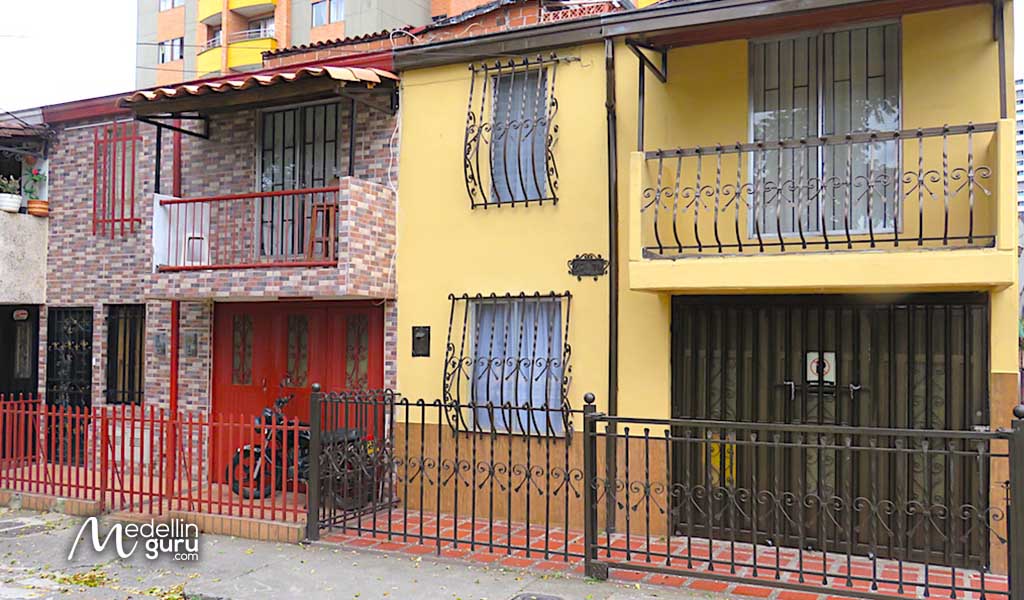
In order to decide which estrato a home belongs to, the government limits itself to evaluating the façade, the materials with which the roof is built and the conditions of the road in front of the home.
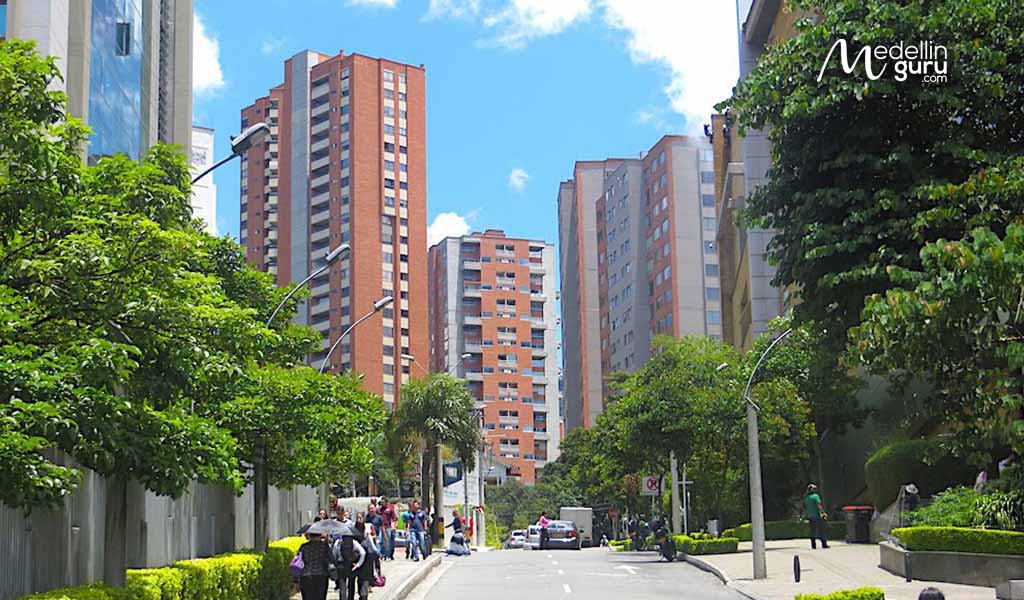
So, it is important to understand that estrato does not correlate to income; households with relatively high incomes can live in lower estratos and still receive subsidies, while some lower‑income families live in higher‑estrato areas and pay contribution surcharges. According to DIAN, the IRS of Colombia, about 20 percent living in estrato 3 are in the top 20 percent of the incomes in Colombia but they receive utility subsidies (lower utility rates) for living in estrato 3.
In 2024, new housing evaluation projects have been announced that imply the end of stratification in Colombia. But that will take years or even decades to change how the whole economic system works. However, as of late 2025 this transition is still in an early or pilot phase, and the legal estrato of a property continues to be used by public utility companies for billing and cross‑subsidies, so any full replacement of the estrato system will likely take many years to implement nationwide.
For expats, the key takeaway is that the “new system” is more of an additional layer focused on measuring household income than an immediate substitute for estratos. Even if future reforms rely more heavily on RUI and similar instruments to assign subsidies, the physical estrato of a building will remain relevant for understanding the quality of local infrastructure, the profile of your neighbors and how the real estate market values each area.
Higher estratos pay higher utility rates
It is important to understand that homes in the higher estrato neighborhoods in Colombia pay higher utility rates to help subsidize lower utility rates in the lowest estratos. Homes in estrato 5 and 6 pay higher utility rates to subsidize lower utility rates in estrato 1, 2 and 3. And homes in estrato 4 doesn’t pay extra or receive subsidies, so they are considered “neutral” in the system.
With the new stratification projects, some things have changed. For example, The following table shows an approximate the price for Claro Hogar, Tigo Hogar and Movistar Hogar plans which in the past, prices varied by estrato, but now, varies by quality, speed and technology, so it is more common to see similar base prices across estratos, with differences depending on the specific plan offered in each neighborhood.
Internet price comparison in Colombia by Estratos
Data from the Comisión de Regulación de Comunicaciones highlights the cost differences for internet, TV, and phone bundles among Colombia’s major providers—Tigo, Claro, and Movistar—calculated at a reference rate of 4,000 COP/USD. In the bandwidth range of 100 to 300 Mbps, pricing is highly competitive: Tigo offers the most affordable rate at 23 USD, followed closely by Claro at 26 USD and Movistar at 27 USD. However, for high-speed connections ranging from 500 to 900 Mbps, the pricing strategies diverge significantly. In this tier, Claro becomes the lowest-priced option at 52 USD, while Tigo costs 66 USD, and Movistar stands as the highest price point at 101 USD.
In relation to public services, the higher estratos 5 and 6 still have higher utility rates for electricity, gas and water services. While estrato 1, 2 and 3 have lower subsidized rates that high strata bills cover, this cross‑subsidy scheme continues to operate in 2025 even as new income‑based tools are being piloted.
In general, homes in higher estratos tend to have higher rental prices and purchase prices per square meter than in lower estratos. This is especially true in the main urban markets like Bogotá, Medellín, Cali and Cartagena.
How much does it cost to buy in estratos 3–5?
As of late 2025, typical prices per square meter to buy an apartment in expat‑friendly areas of major cities such as Medellín, Bogotá and Cartagena generally fall in a band of about 3,000,000 to 6,000,000 COP per square meter (roughly 80 to 160 USD per square foot, depending on the neighborhood and quality of the building). In Medellín, for example, new or good‑quality resale apartments in mid‑range estrato 3–4 areas like parts of Belén, La América, Sabaneta or some sectors of Envigado often start around 2,500,000 to 3,500,000 COP per square meter, while prime estrato 5 zones such as El Poblado or the most in‑demand parts of Laureles can run from about 4,000,000 to 6,000,000 COP per square meter or more, especially in newer towers with amenities. In Bogotá, upper‑middle‑class neighborhoods that are typically estratos 4 and 5 (such as Cedritos, Usaquén or parts of Chapinero) frequently see asking prices from roughly 5,000,000 to 9,000,000 COP per square meter, placing many units in the 200,000 to 350,000 USD range for a standard 70–90 m² apartment, with the most exclusive estrato 5–6 sectors commanding higher figures comparable to or above mid‑sized North American cities.

Why expats should be cautious with lower estratos?
While many Colombians live in estratos 1 and 2, these neighborhoods often have more basic infrastructure, fewer formal services and higher perceived security risks than most expats are used to. Streets can be noisier, public lighting and garbage collection may be less consistent and ride‑hailing or delivery services might be more limited in some areas, which can significantly impact daily comfort. For these reasons, unless you already know the specific neighborhood very well or have strong local support, it is generally recommended that foreign residents avoid living long‑term in estrato 1–2 areas
Where do Colombians live? Which estrato?
The majority of Colombians live in estrato 1, 2 or 3 homes, which represents about 80 percent of the housing in Colombia. In addition, the wealthy estrato 6 in Colombia represents only about 3 to 4 percent of the housing in Colombia, so very high‑estrato neighborhoods are a small part of the overall market.
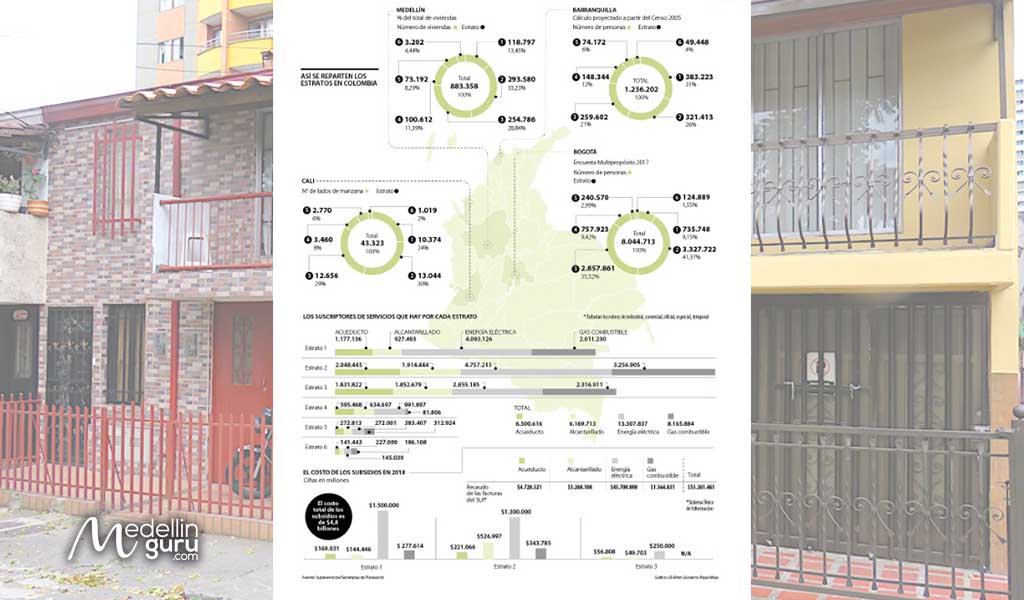
The distribution of homes in estratos in cities in Colombia varies by the city. And some small pueblos in Colombia may not have all six estratos. The following table shows the percentage of homes in the four largest cities in Colombia in each estrato, and updated figures from recent DANE‑based studies continue to confirm that most of the urban housing stock remains concentrated in the lower and middle estratos (1, 2 and 3), with estratos 5 and 6 representing a relatively small share of households.
How to Choose the Right Estrato for Your Lifestyle
Choosing the right estrato is not only about how much you pay for utilities; it also affects your day‑to‑day experience, your neighbors, and how quickly you adapt to life in Colombia. When deciding where to live, it helps to think about your budget, your lifestyle priorities, and how “local” or “expat‑oriented” you want your neighborhood to feel.
| Profile / Priority | Recommended estrato range | What you can expect |
|---|---|---|
Tight budget, long‑term stay, local feel |
3–4 |
More local neighbors, lower rent and utilities, decent services. |
Balance of comfort and authenticity |
3–5 |
Good infrastructure, parks, shops, mix of local and expats. |
Maximum comfort and amenities, less price‑sensitive |
5–6 |
Best services, malls, restaurants, highest prices and utilities. |
Curious but cautious about safety |
3–4 (avoid 1–2 at first) |
Safer than most 1–2 areas, easier adaptation, still local character. |
If you are an expat, you should select a neighborhood in a suitable stratum that offers security, comfort and a cost of living in line with your income, especially if you plan to stay long term. We advise you to speak directly with a real estate agent, who can explain the estrato of each area, typical utility costs and current market prices before you commit to a contract. Whether you are looking to buy or rent, it is best to get professional advice before deciding where to live, as local experts can help you compare options in estratos 3, 4 and 5 in different cities and avoid neighborhoods that may not match your expectations for safety or lifestyle


Estratos in Medellín and the Aburrá Valley
The distribution of homes in estratos in the comunas in Medellín and municipalities also varies. The following table shows the percentage of homes in each estrato in the comunas in Medellín as well as the average estrato.

The distribution of homes in estratos in cities in Colombia varies by the city. And some small pueblos in Colombia may not have all six estratos. The following table shows the percentage of homes in the four largest cities in Colombia in each estrato.
In Medellín, 42% percent of the population belongs to the lower strata, 46% to the middle level and 12% expressed that they belong to the high level of social and economic stratification. For 2024–2025, municipal cadastral and planning statistics continue to show a similar pattern, with the majority of households concentrated in lower and middle estratos and only a relatively small share in the highest estratos.
Best estratos for expats in Colombia’s major cities
In practice, most expats renting or buying in Colombia focus on neighborhoods in estratos 3, 4 and 5, where there is a better balance between price, safety, walkability and access to services. In cities like Medellín, Bogotá, Cali, Cartagena and Barranquilla, these estratos usually offer paved streets, more reliable public utilities, better internet coverage and easier access to shopping centers, cafés and coworking spaces that appeal to international residents
Recommended neighborhoods for expats in Medellín
-
Laureles (mainly estratos 4 and 5):
Tree‑lined streets, walkable café culture, good access to public transport and a quieter, more residential feel compared to El Poblado.
-
El Poblado (estratos 5 and 6, with some 4)
The most established expat zone, with the widest range of furnished rentals, restaurants, nightlife and shopping, but also among the highest prices in the city.
-
Envigado (estratos 3–5)
A popular choice for long‑term expats who want a more local, family‑oriented atmosphere with good services and slightly lower prices than El Poblado, especially in some estrato 3–4 sectors.
-
Sabaneta (estratos 3–4)
A fast‑growing municipality in the south of the valley with many new apartment buildings, a more relaxed small‑town feel and competitive prices per square meter for both rentals and purchases.
Recommended neighborhoods for expats in Bogotá
-
Chapinero Alto and Chapinero Central (estratos 3–4)
Mixed, urban areas popular with students and young professionals, with good access to universities, restaurants and public transport.
-
Zona G and surroundings (estratos 4–5)
Known for gastronomy and boutique hotels, with a mix of residential and commercial properties attractive to expats looking for a central, walkable lifestyle.
-
Cedritos and Usaquén (estratos 4–5)
Northern areas with many apartment buildings, shopping centers and services, often chosen by families and long‑term foreign residents for their balance of comfort and relative calm
Recommended neighborhoods for expats in Cali, Cartagena and Barranquilla
-
Cali – Ciudad Jardín and Granada (mainly estratos 4–5)
Areas with shopping centers, restaurants and better security compared to lower‑estrato neighborhoods, frequently chosen by professionals and expats.
-
Cartagena – Bocagrande, Castillogrande and El Laguito (estratos 4–5)
Coastal, high‑rise zones with tourist infrastructure, sea views and higher prices, attractive to foreign buyers and investors.
-
Barranquilla – Alto Prado and El Prado (estratos 4–5)
Traditional middle‑ and upper‑middle‑class neighborhoods with good services and access to commercial zones, popular among executives and expats posted on corporate assignments.

Can you change the estrato for an apartment or casa?
Is it possible to change an estrato for an apartment or casa (house)? Perhaps you will find that the home across the street is a lower estrato and you may want the estrato of your home re-evaluated.
Sometimes the estrato ratings don’t make sense. For example, when we lived in Belén, a neighbor didn’t understand why his building was rated estrato 5 when we were in a nicer and newer building a block away that was rated estrato 4.

Any person or group of people can file a claim for the estrato assigned by the mayor’s office for your home. This claim is filed with the mayor’s office of your municipality, which has the legal obligation to address the claim and resolve it within a maximum period of two months.
Once the notification of the mayor’s office decision has been received, if the user is not in agreement it can be appealed to the Comité Permanente de Estratificación, which also has two months to resolve it. As of 2025 this general procedure remains in force nationwide, although each municipality may offer its own formats and online channels to submit the claim and follow up on the process.
Are you looking to buy or sell Real Estate in Colombia?
Medellin Guru has partnered with Real Estate by expatgroup.co to provide real estate services to foreigners and locals interested in buying and selling properties in Medellin and across Colombia.
Recognizing our readers’ demand for real estate guidance, this partnership with Real Estate by expatgroup.co, aims to deliver trustworthy and comprehensive real estate services to our audience, including support in choosing the right estrato and neighborhood for your needs.

We chose to collaborate with Real Estate by expatgroup.co for buying and selling real estate services for several reasons: Real Estate by expatgroup.co is recognized globally and is a familiar brand for foreigners, which gives many expats additional confidence when entering the Colombian property market. As one of Colombia’s largest realtor companies, Real Estate by expatgroup.co has extensive coverage throughout the country, enabling it to serve various locations in Colombia and to advise clients on options in estratos 3, 4 and 5 in multiple cities, not just Medellín.
Medellin Guru Real Estate Service
Our reliable partner, a leading real estate company, offers a wide range of services:
- Transfer funds to Colombia
- Legal analysis property background checks
- Sales agreement
- Deed registration
- Legal representation
- Investment visa
GET 40% OFF IN REAL ESTATE SERVICES
The expatgroup.co anniversary offer is now open! Our partner, expatgroup.co, is offering high-quality Real Estate services with incredible limited-time offers. Invest in Colombia today!
*Offer available until January 30th.
*Apply terms and conditions.
Medellin Guru's Comprehensive Real Estate and Investment Series
On the Medellin Guru website, we have a comprehensive and up-to-date guide to buying, selling, and renting apartments and choosing a neighborhood in Medellin found in several articles, including:
Buying and Selling Apartments
- Medellin Real Estate: Property Buyer’s Guide for Foreigners
- Selling Real Estate in Colombia: A Guide to Selling for Foreigners
- Mistakes Foreigners Make When Buying Real Estate in Colombia
- Current Costs to Buy New Apartments in Medellin
- Rent vs Buy: Downsides of Renting and Buying Property in Medellin
- 13 Things Real Estate Agents in Colombia May Not Tell You
- How to Obtain a Colombia Investment Visa
Renting Unfurnished Apartments:
- Apartment Rental Guide: Renting Unfurnished Apartments in Medellin
- Guide to Finding Unfurnished Apartments and Casas in Medellin
- Guide to Overcoming the Fiador Requirement in Colombia
- Unfurnished Apartment Rental Costs in Medellin
- 6 Inexpensive Neighborhoods for Unfurnished Rentals in Medellin
- Furnishing Apartments: A Guide to Furnishing Apartments in Medellin
- Apartment vs Casa (House) Rentals in Medellin: Pros and Cons
Renting Furnished Apartments:
Choosing a Neighborhood in Medellin:
Also, we have several articles that can be used to help foreigners choose a neighborhood in Medellin:
- Laureles: The world’s coolest neighborhood for 2023 by ‘Time Out’ is in Medellin, Colombia
- What are the Safest Neighborhoods in Medellin and the Aburrá Valley?
- 5 Best Neighborhoods in Medellin: A Guide to Choosing a Neighborhood
- 9 Downsides of El Poblado: Living in Medellin’s Expensive Neighborhood
- Estratos: A Guide to Understanding Estratos in Colombia
- El Poblado vs Laureles: Which is the Better Neighborhood to Live in?
- El Poblado vs Envigado: Which is the Better Neighborhood to Live in?
- El Poblado vs Sabaneta: Which is the Better Neighborhood to Live in?
- El Poblado vs Belén: Which is the Better Neighborhood to Live in?
- 2018 Unfurnished Apartment Rental Costs in Medellin in 5 Neighborhoods Popular with Expats
- 6 Inexpensive Neighborhoods for Unfurnished Rentals in Medellin
Airbnb in Colombia:
- 9 Strategies to Find Killer Deals on Airbnb in Colombia
- 15 Things to Know Before Investing to Become an Airbnb Host in Colombia
- 10 Airbnb Best Practices for Airbnb Hosting in Colombia
- 9 Tips to Attract Long-Term Airbnb Guests in Colombia
- 7 Strategies for Airbnb Slow Season in Colombia
- How to Identify Problem Airbnb Guests in Colombia Before They Book
- 15 Ways to Increase Your Airbnb Search Rank In Colombia
- How Safe is Airbnb in Colombia? Is it Safe to Use Airbnb in Colombia?
- Airbnb Travel Itinerary for Your Airbnb Guests in Colombia
- How to Get Started on Airbnb in Colombia: A Guide

The Bottom Line: Estratos - A Guide to Understanding Estratos in Colombia
An estrato in Colombia is a stratification system that classifies residential properties into different socioeconomic strata, and this classification continues to be used in 2025 by municipalities and utility companies to organize residential billing and cross‑subsidies. The classification is crucial for the provision of public utilities, as it allows for differential charging for services based on the general economic capacity associated with each stratum, rather than on each household’s exact income.
The goal is to ensure that those with higher economic capacity contribute more towards public services while also enabling subsidies to be assigned to those in lower strata, thereby assisting them in paying their utility bills. Overall, the estrato system is a mechanism to promote equity in access to public services and utility payments, and although Colombia is beginning to introduce complementary income‑based tools to refine how subsidies are targeted, estratos still matter for how most residential utility charges are calculated today.
Medellin Guru Social media
Be part of our community. Find out about news, participate in events and enjoy the best of the city.