

There are many reasons why an expat might choose Colombia as their destination for a long-term stay. One of them is the numerous holidays that the country has, positioning itself worldwide as number 11 with the most festive and in Latin America as the second.
In 2026, Colombia will have 18 public holidays, one more than in 2025. These “festivos” range from civic commemorations to major religious feast days, and they shape everything from long weekends to local festivals. Whether you are living in Medellín, Bogotá, or a colorful pueblo, understanding the holiday schedule is essential for planning your travel, banking, and business activities.
11 Puentes
Colombia holidays that move to monday, to extend the weekend.
7 week days
Days that are fixed and do not move.
Colombia holidays change every year, depending on the day they occur. Some of them can be moved, but others cannot. For this reason, the government created Emiliani’s Law in Colombia, enacted on December 6, 1983, as Law 51. This law requires that most holidays be moved to the following Monday. However, Colombia’s holiday dates associated with Easter, the Immaculate Conception, and Christmas have never changed.
The Official Colombia Holidays in 2026
In 2026, there will once again be two months with no national holidays: February and September. Even so, the year remains highly festive, with a total of 18 public holidays spread across the rest of the calendar.
These festivos are ideal for resting and spending time with family and friends, and they are also a great chance for foreigners to dive into Colombian customs and traditions. Long weekends and special dates become natural opportunities to experience the country’s rich folklore, history, and regional culture up close.
To help you plan around these celebrations, you can download ProColombia’s “Fairs and Festivals” guide. Inside, you will find standout events you can schedule throughout 2026 to deepen your connection with the diverse culture of your new home in Colombia.
Medellin Guru Guides
Download the guide Fairs and Festivals from Procolombia with helpful information about the most important celebrations in the country.
Below, we list Colombia holidays and explain why they are considered “festivos” days.

Colombia Holidays #1. January 1 – Thursday: New Year’s Day (Año Nuevo)
New Year’s Day falls on a Thursday, giving many people the chance to create an unofficial four-day weekend. As a fixed public holiday that does not move under the Emiliani Law, it is always celebrated on January 1.
Colombians welcome the new year with a mix of global and local traditions, from midnight fireworks to colorful “agüeros,” or superstitions meant to attract good fortune. Across many neighborhoods—especially in Antioquia—families and friends often gather for a “paseo de olla” and cook sancocho, a hearty traditional stew, over wood fires in the street.
Expats will also notice fun customs such as wearing yellow underwear to attract prosperity, eating 12 grapes at midnight for 12 wishes, and even running around the block with an empty suitcase to “ensure” a year full of travel. Participating in these small rituals is an easy way to connect with local culture from your very first day of 2026.
Colombia Holidays #2. January 12 – Monday: Epiphany (Día de Los Reyes Magos)
In 2026, the Epiphany holiday (Día de los Reyes Magos) will be observed on Monday, January 12, because the official date of January 6 is moved to the following Monday under the Emiliani Law. This Catholic celebration commemorates the visit of the three wise men—Melchior, Gaspar, and Balthazar, to the infant Jesus in Bethlehem, bearing symbolic gifts of gold, frankincense, and myrrh.
Considered one of Colombia’s most important religious holidays alongside Easter and Christmas, it also marks the traditional end of the Christmas season, when many families finally take down their decorations and nativity scenes. Common customs include children leaving their shoes out in hopes of receiving small gifts, sharing a ring‑shaped Rosca de Reyes cake, and attending colorful local parades or church services.
Colombia Holidays #3. March 23 – Monday: Saint Joseph’s Day (Día de San José)
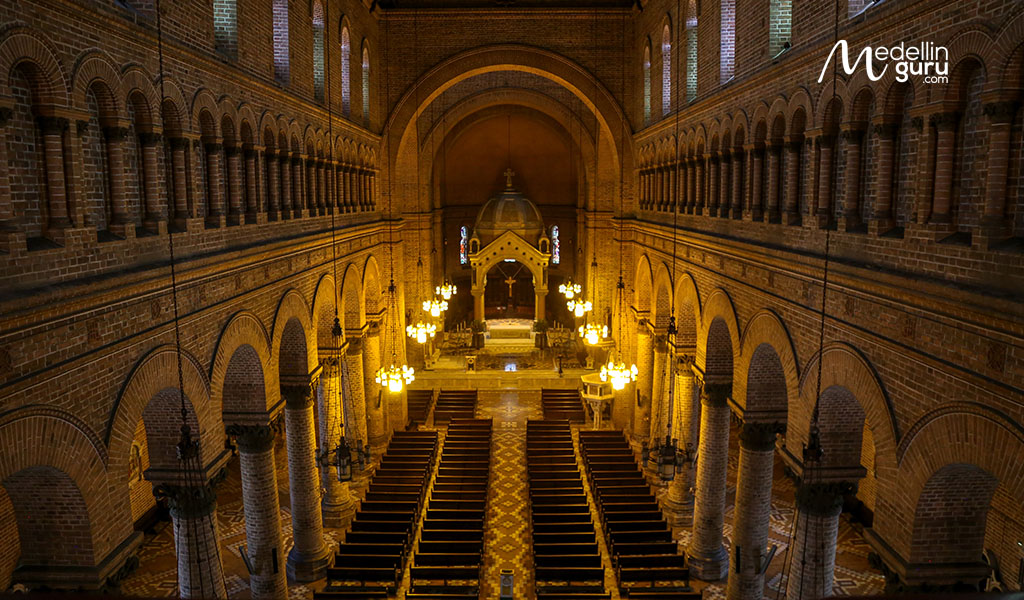
Saint Joseph’s Day is a holiday that celebrates the Virgin Mary’s husband and the adoptive legal father of Jesus Christ. This is a popular day for attending mass in the beautiful churches in Medellín and the Aburrá Valley.
Also, since 2000, this day has been considered Men’s Day in the country.
Colombia Holidays #4. April 2 – Thursday: Maundy Thursday (Jueves Santo)
Maundy Thursday is a major Christian holiday commemorates the Last Supper and Jesus washing the feet of his Apostles as a sign of humility and service.
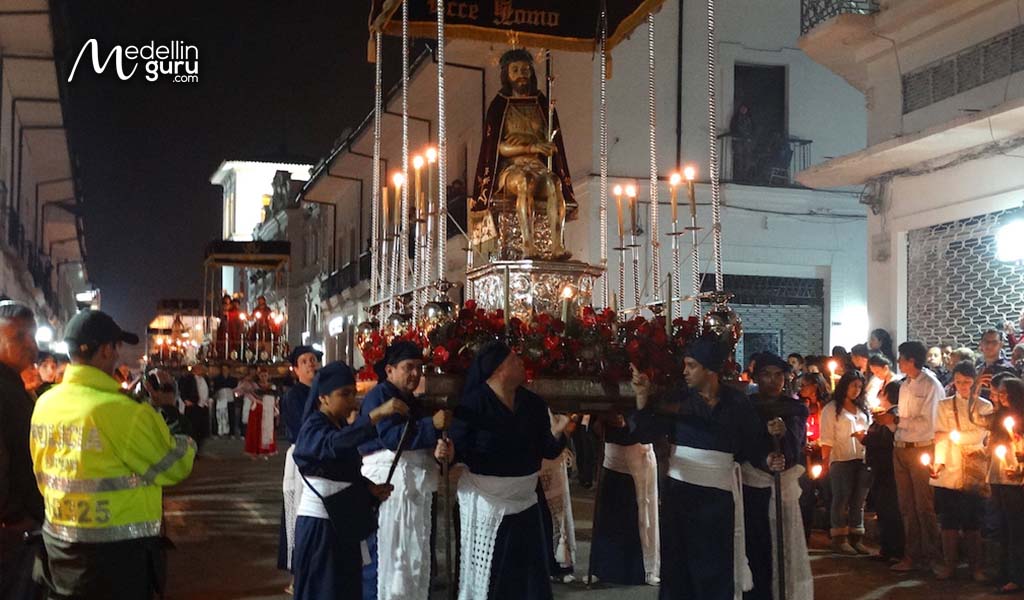
In Colombia, it forms part of the heart of Semana Santa (Holy Week), a period dedicated to remembering the passion, death, and resurrection of Jesus. Many Catholics take part in traditional pilgrimages, visiting seven different churches to reflect on key moments of Christ’s passion, and cities and towns often organize special liturgies, processions, and times of silent prayer.
Colombia Holidays #5. April 3– Friday: Good Friday (Viernes Santo)
Good Friday, also known as Holy Friday or Great Friday, is a religious holiday that commemorates the crucifixion – and eventual death – of Jesus Christ. This holiday is observed on the Friday before Easter Sunday.
In the Roman Catholic tradition, this day is typically treated as a fast day – a day in which one only has one full meal and abstains from consuming meat.
Important information about Holy Week
Many Colombians take the entire week off to observe these religious traditions. Consequently, schools and universities close for the duration of the holiday. You will likely find numerous commercial shops shuttered during this period. Additionally, banks do not provide office services on official holidays; in 2026, they will be closed on Monday, April 2, Thursday, April 2, and Friday, April 3.
Across the nation, cities and families celebrate Semana Santa with varying levels of intensity. From solemn processions to quiet reflection, these customs are deeply rooted in Colombian culture. For a more detailed look at these traditions, explore our separate guide to Semana Santa in Colombia on this website.
Colombia Holidays #6. May 1 – Friday: Labor Day (Día del Trabajo)
Labor Day originated in the United States on the first Monday in September.
Throughout the rest of the world, over 80 countries, including Colombia, celebrate Labor Day, also known as May Day and International Workers’ Day, on the first day of May.
In Colombia, the day is a mix of rest and civic engagement. Many families take advantage of the long weekend to travel or gather for traditional meals like sancocho, while major cities often host large marches organized by labor unions to advocate for current workers’ rights and social demands.
Colombia Holidays #7. May 18– Monday: Ascension Day (Día de la Ascención)
Ascension Day is the celebration of Jesus rising into heaven after he had spent 40 days on earth after the resurrection. According to the New Testament, this took place before the eyes of his disciples. Ascension Day is the 40th day of Easter.
As with many religious holidays in Colombia, shifting the observance to Monday creates a three-day puente or long weekend. For both expats and locals, it is a popular opportunity to travel and explore Colombia’s diverse tourist destinations, often enjoying mild May weather in many regions. Also, it is an ideal weekend to enjoy Colombia’s different tourist attractions.
Colombia Holidays #8. June 8 – Monday: Corpus Christi
Corpus Christi signifies the body and blood of Jesus Christ. It refers to the components of the Eucharist, also known as the Holy Communion, Last Supper, or Lord’s Supper. This holiday celebrates Christ’s holiness.
Corpus Christi was established to create a feast focused solely on the Holy Eucharist, emphasizing the joy of the Eucharist, which is the body and blood of Jesus Christ.
In 1264, Pope Urban IV declared Corpus Christi as a holiday. Spain was the first country to declare it as a national holiday in 1280.
There is no exact date of when it began to be celebrated in Colombia; being such a Catholic country, they also declared it a Colombian holiday.
Colombia Holidays #9. June 15 – Monday: Sacred Heart (Sagrado Corazón)
The Sacred Heart holiday commemorates the physical heart of Jesus as a symbol of his divine love for all humanity. The devotion to the Sacred Heart originated in the Middle Ages out of worship of the wounds Jesus received during the crucifixion.
This official public holiday in Colombia always falls on a Monday since it’s celebrated 10 weeks and a day after Easter Sunday.
Most religious people in Colombia take advantage of this holiday to visit churches in the city and pray.
Colombia Holidays #10. June 29. – Monday: Saint Peter and Saint Paul Day (Día de San Pedro y San Pablo)
This public holiday commemorates the martyrdom (torture, suffering, and death) of two saints, the apostles, Saint Peter and Saint Paul.
Beyond its solemn religious meaning, which dates back to at least the 4th century AD, this day has evolved into one of Colombia’s most vibrant cultural celebrations. It serves as the grand finale to major regional festivities, most notably the Bambuco Festival in Neiva and the Colombian Folkloric Festival in Ibagué, when streets fill with horseback processions (cabalgatas), colorful parades, and beauty pageants celebrating the Sanjuanero dance.
Expats who want to experience authentic Colombian folklore should consider visiting the departments of Tolima and Huila during this long weekend, where they can enjoy live music, dance, and regional delicacies such as asado huilense and lechona.
Knowing more about Colombia
Many Colombian holidays are also ideal opportunities to travel and get to know the territory. In the Procolombia guide “Fairs and Festivals,” you will find cultural and musical programming from the country’s different regions to explore the diversity of Colombian customs and traditions. Download it below.
Medellin Guru Guides
Download the guide Fairs and Festivals from Procolombia with helpful information about the most important celebrations in the country.

Colombia Holidays #11. July 20 –Monday: Colombia Independence Day
This holiday is always celebrated on July 20 in Colombia. On July 20, 1810, an uprising in Bogota was seen as the start of independence in Colombia.
On this date in 1810, Colombian patriots stirred the population of Bogotá into a major uprising in the streets against Spanish rule. This uprising is celebrated by the Colombia Independence Day holiday.
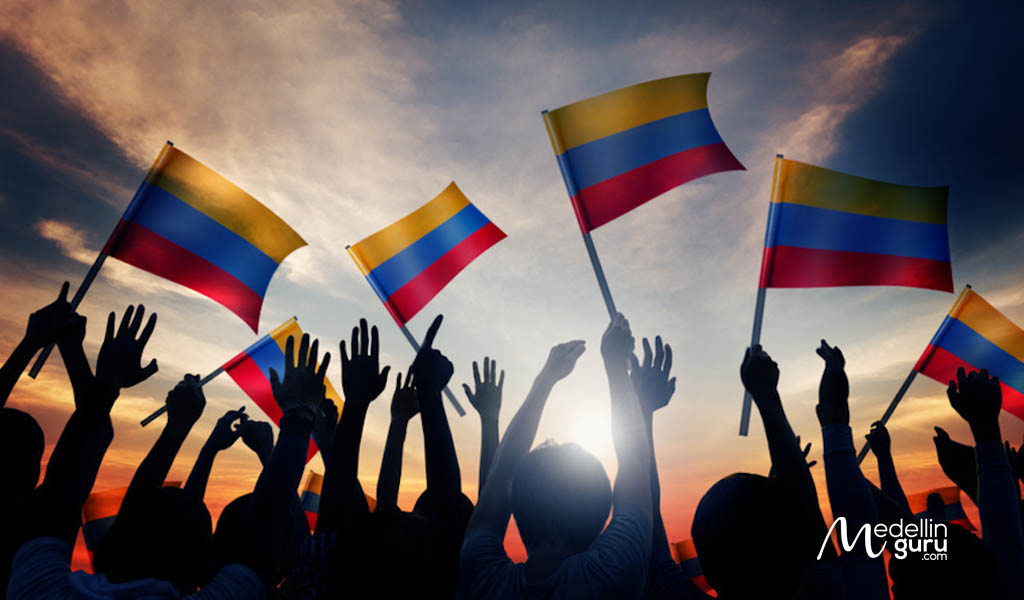
Across the country, the day is marked with impressive military and civic parades, patriotic ceremonies, and colorful folkloric dances such as cumbia and bambuco, while the tricolor flag fills windows, balconies, and public spaces. For expats, it is an ideal time to join local celebrations, enjoy traditional dishes like bandeja paisa, ajiaco, or empanadas, and even try tejo, Colombia’s explosive national sport, often played during holiday gatherings.
Colombia Holidays #12. August 7 – Frady: Battle of Boyacá Day (Día de Batalla de Boyacá)
This holiday in Colombia is celebrated every year on August 7. This marks the date of the Battle of Boyacá in August 1819, which was a decisive victory in the war for Colombia’s independence from Spain.
Beyond the military parades and patriotic ceremonies held across the country, August 7 is also celebrated as the Day of the Colombian Army and the Day of the National Condor, adding both institutional and environmental pride to the occasion. In Bogotá, festivities are particularly notable because the date closely follows the city’s foundation anniversary on August 6, often resulting in an extended week of cultural festivals, concerts, and public events that expats can enjoy..
Colombia Holidays #13. August 17 – Monday: Assumption of Mary (Asunción de María)
The Assumption of Mary is a holiday celebrated in August every year. This day commemorates Mary’s death and her assumption into heaven.
The Assumption of Mary was first celebrated under Pope Sergius I in the 8th century, and Pope Leo IV confirmed the feast as official.
In Colombia, it remains one of the most important Marian feasts of the year. Many faithful visit churches to honor Mary as a model of trust and hope, often decorating altars with white and blue flowers to symbolize purity and heavenly glory. For expats, this long weekend is another popular moment for domestic travel, but it is important to remember that many local businesses may close or reduce hours to observe the religious solemnity.
Colombia Holidays #14. October 12 – Monday: Columbus Day (Día de la Raza)
Commemoration of this date began unofficially in the early 20th century. President Faustino Rodríguez of the Ibero-American Union officially chose October 12 in 1913 to unify celebrations across Spain and Latin America. Since 1915, the date has been known as Columbus Day to mark Christopher Columbus’s 1492 arrival in the Americas.
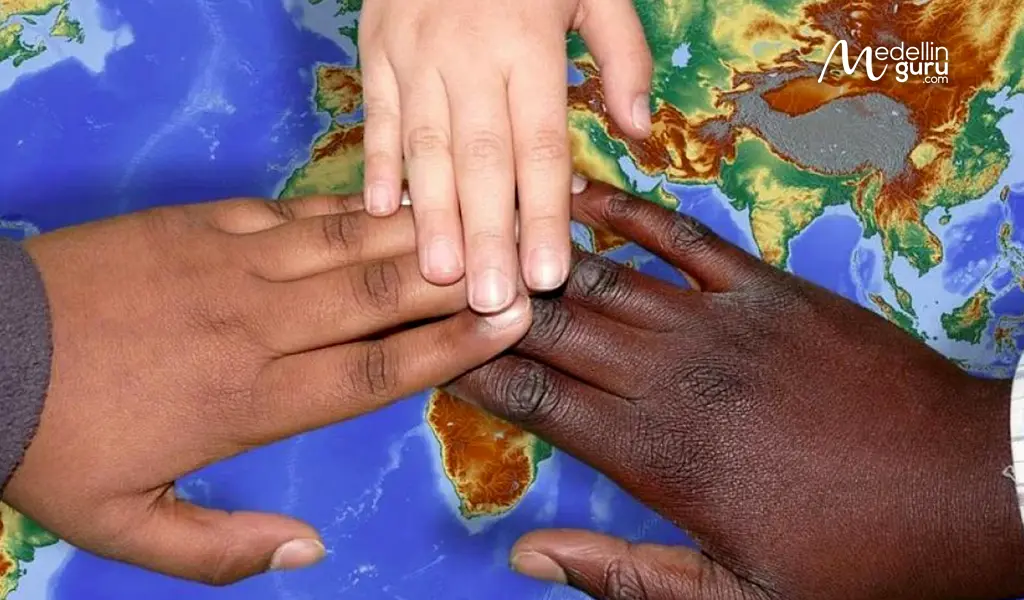
Modern celebrations now focus on inclusion and cultural syncretism. This long weekend honors the unique contributions of Indigenous communities, Afro-Colombian peoples, and European descendants. While banks and many government offices close, the day serves as a vital moment for public reflection on the nation’s shared identity.

Colombia Holidays #15. November 2 – Monday: All Saints' Day (Día de los Santos)
All Saints’ Day honors every Christian saint, whether known or unknown. This solemn religious holiday also goes by names such as All Hallows’ Day or the Feast of All Saints. Roman Catholicism considers this a holy day of obligation, requiring the faithful to attend mass unless they are ill.
In Colombia, the celebration focuses heavily on family, remembrance, and prayer. Many people visit cemeteries to clean and decorate the graves of their loved ones with fresh flowers. Families often light candles starting on the evening of November 1 to pray for the repose of deceased relatives. For expats, this reflective time offers a unique look at how deeply faith and family bonds shape local culture
Colombia Holidays #16. November 16 – Monday: Independence of Cartagena (Independencia de Cartagena)
The holiday commemorates when Cartagena became the first Colombian city to declare independence from the Spanish.
Festivities on this day include many parades in Colombia. The most notable is Cartagena, where the most colorful parade occurs, which ends at Plaza Trinidad, where Cartagena’s independence was originally declared.
Also, in Cartagena on this date is the ‘Battle of Flowers,’ which is the beauty contest to pick Miss Colombia who will go on to represent Colombia in the Miss International.
Colombia Holidays #17. December 8 – Tuesday: Immaculate Conception Day (Día de la Inmaculada Concepción)
This holiday celebrates the belief in the immaculate conception of the Virgin Mary. And that Mary was void of original sin all of her life.
The Immaculate Conception is one of the most important Marian feasts of the Roman Catholic Church.
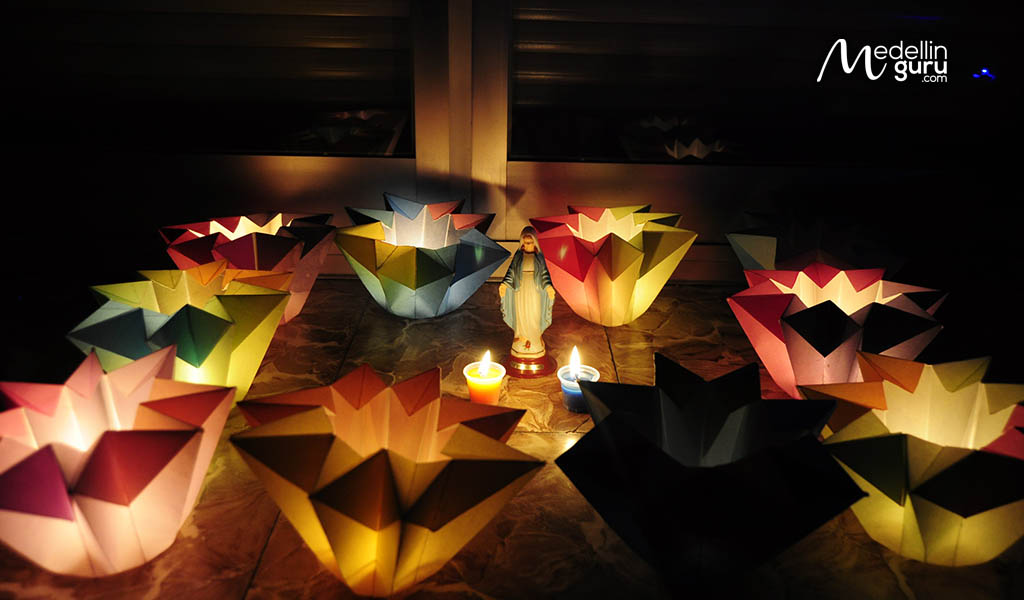
This holiday actually starts on the evening before in Colombia. In addition, the Christmas season in Colombia unofficially begins on December 8, known as Día de las Velitas (Day of Candles).
On the evening of December 7, people place paper lanterns and candles on porches, balconies, streets, sidewalks, squares, and parks in cities and pueblos throughout Colombia. On December 8, houses in Colombia typically hoist a white flag with the image of the Virgin Mary.
On December 8 itself, it is common to see homes flying a white flag with the image of the Virgin, and many Catholics attend special masses or join neighborhood celebrations. For expats, this is also a delicious time of year, with traditional Christmas-season treats like buñuelos and natilla appearing at family gatherings, parishes, and street stalls
Colombia Holidays #18. December 25 – Friday: Christmas Day (Día de Navidad)
Christmas Day celebrates the nativity of Jesus, which, according to tradition, took place on December 25, 1 BC. December 25 is a public holiday in many countries around the world.
At the heart of the celebrations is the Novena de Aguinaldos, a nine-night tradition leading up to Christmas Eve. Families, friends, and neighbors gather around the pesebre (nativity scene) to pray, sing traditional villancicos, and share seasonal treats like natilla and buñuelos, often turning each night into a small party.
For many expats, one of the biggest highlights is Medellín’s world-renowned Alumbrados Navideños (Christmas Lights). In recent years, the city has moved away from more commercial themes and returned to traditional Colombian motifs, including monumental figures that pay tribute to local customs and folklore and even aim for Guinness World Records.

Colombian Holidays: The Other Holidays
Some cities in Colombia have additional public holidays. For example, Barranquilla normally has two holidays on the Monday and Tuesday of Carnival in Barranquilla.

In addition, many observed holidays aren’t official holidays. For example, Día de Amor y Amistad (Valentine’s Day of Colombia) falls on September 2024.
Here’s a list of several of the observed holidays in Colombia in 2024 that aren’t official public holidays:
-
March 8
Sunday: Women’s Day
-
April 26
Sunday: Secretaries' Day
-
May 10
Tuesday: Mother's Day
-
May 15
Frady: Teacher's Day
-
June 21
Sunday: Father's Day
-
September 19
Saturday: Día de Amor y Amistad (Valentine's Day of Colombia)
-
October 31
Saturday: Halloween
-
December 24
Thursday: Christmas Eve
-
December 31
Thursday: New Year's Eve
Many Places Are Closed on Colombian Holidays
In Colombia, on public holiday dates, all the banks, government offices, many shops, and some restaurants close. Larger grocery stores tend to be open, and many shops in the malls and movie theaters will be open on Colombia holidays.
In some countries, everything seems to be closed during holidays. In Colombia, the malls and movie theaters are open and normally packed on holidays. So, if you plan to go to a movie on a holiday in Colombia, buy a ticket early, or you will have to stand in a long line.
For people working in Colombia, labor laws are generally protective and recognize all official national holidays as paid days off for eligible employees. Workers who are required to work on a public holiday are typically entitled to additional compensation or a compensatory day off, depending on their contract and current regulations. Because labor rules can change and may vary by sector or collective agreement, anyone employed in Colombia should confirm the exact holiday pay and surcharge rates directly with their employer or a qualified labor lawyer rather than relying on fixed percentages in a general guide.
Medellin Guru's comprehensive Colombian culture series
In Medellin Guru, we love Colombia, and we usually write many blogs about Colombian culture, places to visit, and other tips for all expats to have a reliable guide and valuable and relevant information about Colombia. Read our blogs about Colombian Culture here:
- Top Tourist Attractions in Colombia: Top Things to Do
- Top Things to Do in Medellín and Nearby: Top Tourist Attractions
- How to be an Expat in Colombia: 12 Tips to be a Successful Expat
- Top Things to Do in Cali and Nearby: Top Tourist Attractions
- Celebrating July 20th: Colombia Independence Day
- Norte de Santander: 5 Escapes for a Weekend Adventure
- Unlock Ipiales in 24 Hours: Your Essential Adventure Blueprint!
- Pasto: Discover the wonders of the Surprise City
- Top Popular Colombian Drinks to Try When You Visit Colombia
- Villa de Leyva: A Colonial Gem in the Colombian Andes
- Traditional Colombian Food Dishes You Must Try in Colombia
- Medellin Guru Launch 2023: Gentrification, Tourism and Investment
- Popular Colombian Desserts You Must Try While in Colombia
- Exotic Tropical Fruits of Colombia a Fruit Lovers Paradise
- Popular Colombian Soups to Try When You Visit Colombia
- Día de las Velitas: Day of Candles Tradition in Colombia on December 7
- Things in Colombia That May Be Strange for Foreigners
- Things Colombians Do That Foreigners May Find Weird
- Popayán: A Well-Preserved Colonial Gem in Colombia Worth Visiting
- Tejo: A Colombian Game That Rewards You for Explosions
Other things to see and do in Colombia
- Caño Cristales – the most beautiful river in Colombia, which has also been called the most beautiful river in the world by some people.
- Carnival in Barranquilla – the second largest carnival in the world.
- Cartagena – Oozing history, romance and sun-drenched beaches, the allure of historical Cartagena is hard to resist.
- Ciudad Perdida – the site of an ancient city in Colombia that is older than Machu Picchu in Peru.
- Colombia’s Pacific coast – often overlooked by tourists visiting Colombia but offering untamed nature and undiscovered beauty that is off the beaten path for most foreign tourists.
- Desierto de la Tatacoa – the second largest arid zone in Colombia is Tatacoa Desert, which has surreal desert landscapes and some of the best stargazing in Colombia.
- Guatapé – a picturesque pueblo near Medellín known for its huge rock and lake. And it’s likely the most visited pueblo in Colombia by foreigners.
- La Guajira Peninsula – one of the most visually stunning places in South America, which is located on the northern tip of Colombia where the desert meets the sea.
- Las Lajas Sanctuary – the most beautiful church in Colombia, which has also been called the most beautiful church in the world.
- Medellín’s Christmas lights – Medellín’s annual world-class Christmas lights known as Alumbrados Navideños.
- Feria de Las Flores Medellin – Medellín’s world-famous flower festival each year.
- Parque Nacional Natural Los Nevados – a popular national park in Colombia located in the heart of the Colombian coffee region.
- Parque Tayrona – known for its beautiful beaches and the world’s highest coastal mountain range.
- Popayán – a colonial gem in Colombia best known for its white buildings and churches, it’s a city off the beaten path for foreign tourists but is definitely worth visiting.
- Rio Claro Nature Reserve – located about three hours from Medellín, Rio Claro is the perfect place to unplug from hectic daily life and enjoy a picturesque crystal-clear river, canyon and tropical rainforest.
- Salento and the Cocora Valley – Salento is a picturesque pueblo in Colombia’s coffee region and the nearby Cocora Valley is one of the most striking landscapes found in Colombia.
- San Agustín Archaeological Park – the largest group of pre-Columbian monuments and megalithic statues in South America and is a UNESCO World Heritage Site.
- San Andrés – Colombia’s Caribbean island which is a UNESCO World Biosphere Reserve featuring many beaches, islets and coral reefs that are filled with flora and fauna.
- San Gil – Colombia’s adventure capital that is full of things to do including white water rafting, paragliding, caving, rappelling, hiking and much more.
- San Jose del Guaviare – a hidden gem and eco-tourism location off the beaten path and offering wildlife watching, jungle trekking and delving into Colombia’s prehistoric past.
The Bottom Line: Colombia Holidays in 2026
In 2026, Colombia continues its tradition of being one of the most holiday-rich nations, with 18 official national holidays spread across the year. Because many of these dates fall on—or are moved to—a Monday, there will be 11 long weekends (puentes) in 2026, giving residents and expats frequent chances to travel, rest, and celebrate.
This frequent “celebration mode” is one of the reasons Colombia is often associated with high levels of happiness and optimism, even when formal rankings change from year to year. Surveys and reports have repeatedly highlighted Colombians’ strong sense of community, resilience in the face of adversity, and deep pride in national traditions such as music, football, and local festivals.
As dates for many religious holidays shift annually based on the calendar and the Emiliani Law, it is important to check the current-year schedule when planning travel, paperwork, or business activities. This guide will continue to be updated so you can rely on it as a practical reference for Colombia’s holidays and puentes in 2026 and beyond.
Medellin Guru Social media
Be part of our community. Find out about news, participate in events and enjoy the best of the city.


























17 thoughts on “Colombia Holidays 2026: A Guide to the Many Festivos in the country”
Thanks for the holidays article, it is helpful.
Hi Jeff, regarding the holiday list for 2021, I’ve noticed several discrepancies from other lists. Is the list posted on 12/31/20 for 2021? This is one list I came across which one other list concurs with…
1 Jan Fri New Year’s Day
11 Jan Mon Epiphany Holiday
22 Mar Mon St Joseph’s Day
1 Apr Thu Maundy Thursday
2 Apr Fri Good Friday
1 May Sat Labour Day
17 May Mon Ascension Day Holiday
3 Jun Thu Corpus Christi Holiday
14 Jun Mon Sacred Heart Day
5 Jul Mon Feast of St Peter and St Paul
20 Jul Tue Independence Day
7 Aug Sat Battle of Boyacá Day
16 Aug Mon Assumption Day Holiday
18 Oct Mon Columbus Day Holiday
1 Nov Mon All Saints’ Day Holiday
15 Nov Mon Independence of Cartagena Holiday
8 Dec Wed Immaculate Conception
25 Dec Sat Christmas Day
There are multiple sources with conflicting information in English and Spanish.
We just updated with information from a reliable source in Colombia. One does not match your list – Corpus Cristi is on June 7 not June 3, as it was moved to a Monday.
Thank you for the information!
I would suggest editing the Columbus one though.
Día de la Raza is more to remember the indigenous community, colonization, and cultural diversity of Latin America. While there was “discovery” the reality is more grim. Many Colombianos and for that matter people of Latin America, see this date as important to recognize and honor our indigenous community and the diversity of our countries.
Thank you for this information, Jeff. There are certainly lots of celebrations and commemorations to look forward to.
BTW, it’s true that Ash Wednesday falls before Holy (Maundy) Thursday, but not the day before. Ash Wednesday solemnly marks the beginning of the lenten season. In 2020, that’s February 26.
Thanks for catching that. Article is updated.
Usually I’m so out of the loop that until the morning of the holiday I haven’t a clue what’s going on. But as soon as I step out on to the street it hits me; everything is waay too quiet considering it’s not even Sunday morning. It’s inconvenient in a way because I need to change plans but on the other hand things are really tranquil. So this list of specific dates goes into my permanent file. Thanks.
Thanks, nice post. Most of the Colombians I know don’t seem to know what the reason is for each Colombian holiday except for the major ones.
Thanks again Jeff. Great post, sorry that was years ago I was sailing much of PR. Now Puerto Rico is in serious trouble. Yesterday I heard they lost power again, Part of San Juan and the northern tier of the country. I pray for them to get back and running soon.
Cheers
Thanks for this article Jeff. Good to know about all the Colombia holidays with an up to date list for 2018.
Thanks Jeff read earlier, then got busy. Sounds great to me. Sound a bit like Puerto Rico. I think they celebrate every holiday on the planet. Sometimes more is better.
Cheers!!
Thank you Jeff–Great article & very useful info. At the end of March with Maundy & Good Friday–you mentioned many businesses close for a week–does this mean 3/29–4/4? We have friends coming that week–I’m concerned this will it affect their visit.
Semana Santa this year in Colombia is considered to be from Sunday March 25 to Saturday March 31. I will update the article with this information. Many small businesses shut down but the malls and movie theaters will be open. And the banks will be open on non-holiday days during this time.
Thanks for the helpful article. It seems there are holidays every time I need to go to the bank. Sometimes it seems like the celebrations are nonstop in Colombia.
Love this article. My Colombian friends seem to tell me for most holidays they don´t have a clue why they are celebrating. They are just very happy to get another day off.
Hi David, thanks. My Colombian friends also never seem to know what is the reason for many of the holidays.
I lived in Colombia and in all that time I found Colombians don’t need a reason to celebrate.
Ren