
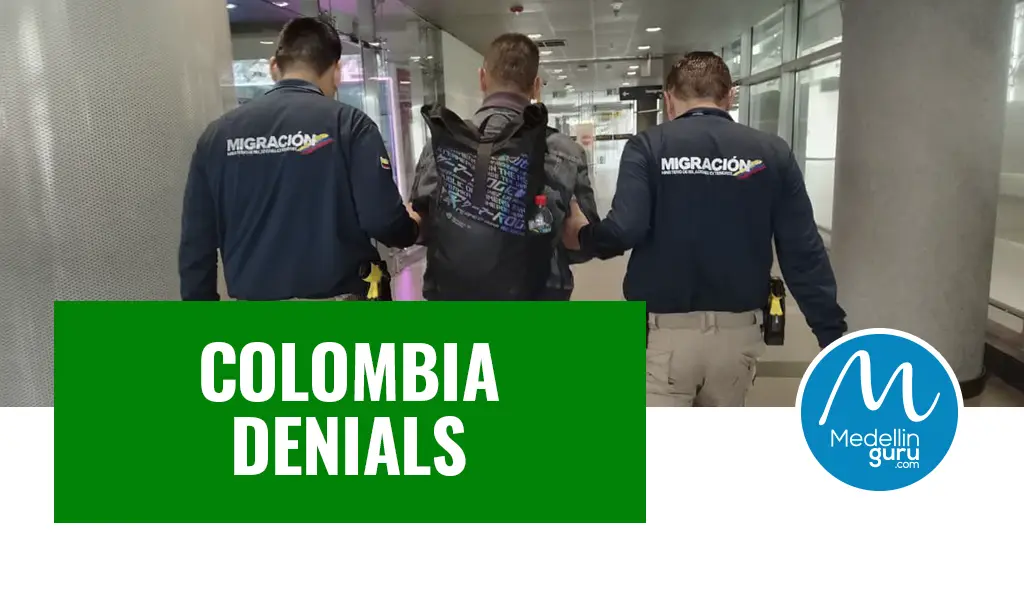
The increase in cases of colombia denials due to tourist inadmissions for sexual exploitation marks a worrying trend at the national level. While 110 inadmissions were recorded in all of 2025, the figure already exceeds 60 cases in the first four months of 2026, highlighting the constant and increasingly demanding migratory flows for foreigners who come to Colombia as tourists or even those seeking to apply for a Colombian visa.
Despite being a problem present in the country’s major tourist capitals, such as Cartagena or Bogotá, this phenomenon is primarily evident in the city of Medellín, the capital of Antioquia, where Migración Colombia sanctioned 80 foreign citizens with an inadmission measure at the end of the previous year, and today there are already 48 cases registered at the José María Córdova International Airport. In the last week alone, from April 19 to 22, 15 foreign citizens, mostly Americans, were denied entry.
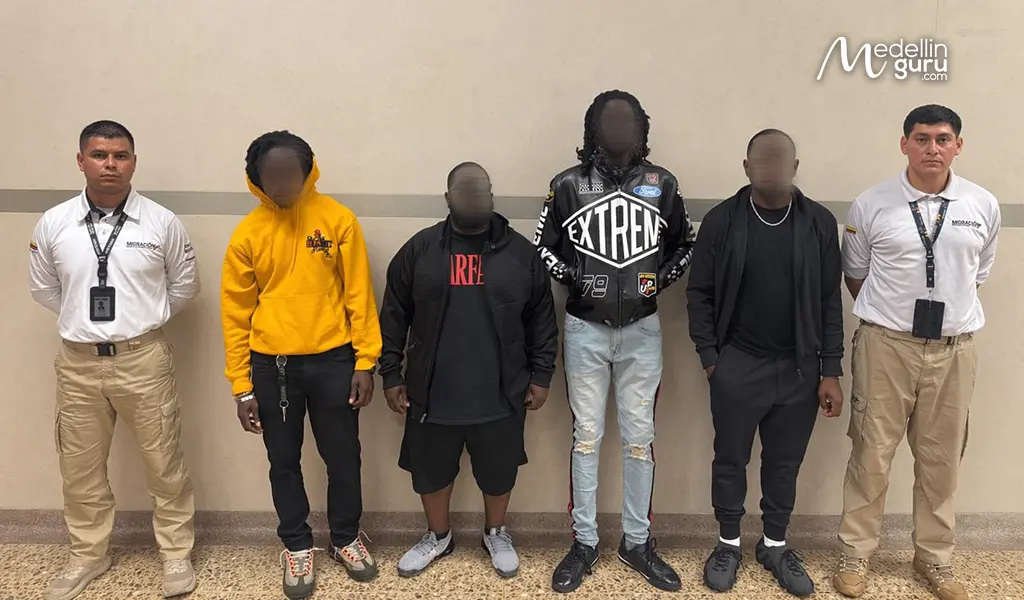
How are the Colombia denials because of inadmissions for sexual exploitation being carried out?
Migración Colombia and governmental entities such as the Mayor’s Office of Medellín have forged alliances that seek to gain greater control over migratory flow to prevent tourists from coming to the country with the purpose of sexual exploitation. These include meetings with the FBI, access to databases and privileged information through the HSI’s Angel Watch system, as well as interviews and migratory actions based on citizen reports, social media reviews, criminal records, and intelligence from authorities that might result in Colombia entry denials.
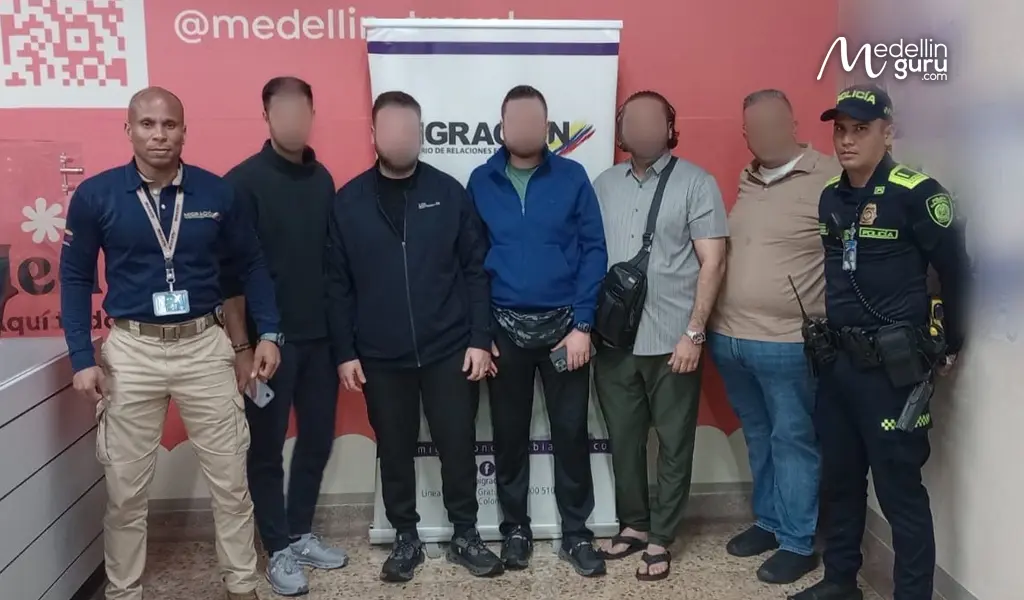
One of the most recent episodes of Colombia denials occurred on a United Airlines flight from Houston, USA, where five American citizens were reported by other passengers after having explicit conversations about the sexual encounters they planned to have in Colombia over the weekend, even showing previous contacts made in the city to “book transportation, farms with pools in rural areas, and women willing to indulge their fantasies”; a statement that immediately put immigration authorities on alert.
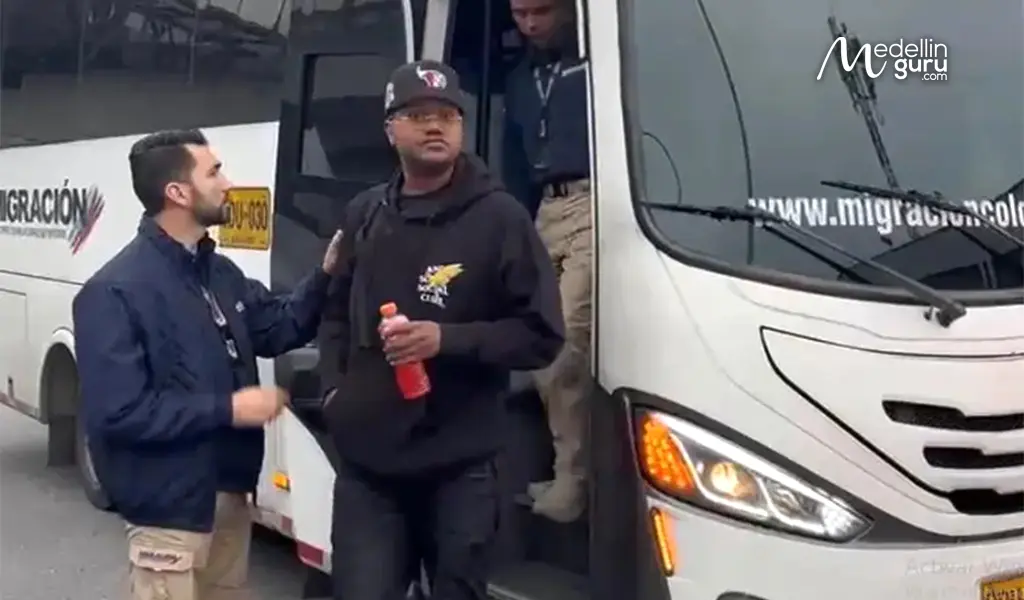
However, it is not the only way these cases are occurring. In other recent cases of Colombia denials, on April 13, an American “influencer” who goes by the name Chill Capo on social media was deported from Medellín. This 42-year-old African American, who has allegedly been in Medellín since 2022, used his social media to offer “advice” to other “Gringos” who wanted to come to Medellín—some of which bordered on illegality, such as evading immigration controls or obtaining fraudulent medical certificates—but he also promoted gatherings and parties aimed at international tourists with apparent purposes of sexual exploitation.
In this case, immigration authorities followed up on and investigated the profile of this particular foreigner, showing that in addition to inadmissions at airports, as indicated by the Director General of Migración, Gloria Arriero, control processes are being carried out by the entity in tourist spots, hotels, and lodgings, among others, where foreigners with backgrounds in human trafficking or sexual exploitation and even social media profiles promoting this type of practice have been identified, and measures such as deportations or expulsions have been applied to them.
How do the Colombia denials because of inadmissions for sexual exploitation impact foreigners?
The regional directorate of Migración in Antioquia indicated that, as a result of the schemes recommended by Chill Capo, immigration controls will be tightened for foreigners arriving at the air terminals in Antioquia, although they reiterated that controls are not limited to the country’s entry and exit points.
"The control is not only at José María Córdova International Airport in Rionegro, but extends to Medellín and its entire metropolitan area. We act forcefully against any situation that affects security, and as a migratory authority, we enforce regulations and the Law"
Gloria Esperanza Arriero, General Director of Migración Colombia.
Likewise, the director of the Antioquia regional office of Migración Colombia, Paola Salazar, also mentioned: “We, as the Colombian State, made the decision to deny entry. This government has intensified the conducting of migratory interviews, where we inquire about the reasons for travel, their destination and place of stay, the areas and activities they intend to frequent; that is our first filter, if necessary, we proceed to a second interview.“
It is important to emphasize that Migración Colombia bases these procedures and migratory decisions on numeral 15 of the grounds for inadmissibility in Decree 1727, where they issue inadmissions under the concept of sovereignty and national security; these are administrative decisions that are notified personally and immediately and have no recourse, executed with the support of the airline, which provides a return flight between one and six hours after the administrative act is issued. Likewise, Migración Colombia also has authority over foreign citizens who pass the filters and enter the country, specifically regarding their conduct within national territory.
Medellin Guru's safety and security series
Safety is the biggest concern of foreigners visiting Colombia or planning to move to Colombia. So, we have a series of 18 popular articles about safety and security in Colombia:
- Is Medellin Safe? U.S. Embassy Colombia Talks About Security for U.S. Citizens
- Emergency Directory Guides to Ensure Your Safety in Colombia
- Is Colombia Safe? Colombia Security and Safety Tips
- Is Medellín Safe? Medellín Security and Safety Tips
- How to Travel and Live in Colombia Safe as a Foreigner
- Colombia Travel Health Policy: A Guide for Expats and Nomads
- How to Obtain 2 Years of Health Coverage for a Colombian Visa
- Migración Colombia alert: No entry for foreigners with Angel Watch reports
- What are the Safest Neighborhoods in Medellín and the Aburrá Valley
- 5 Best Neighborhoods in Medellín: A Guide to Choosing a Neighborhood
- New Airbnb Policies for Hosts in Colombia
- Medellín Robbery: Expat Experience Being Robbed at Knifepoint
- Colombia Gun Laws: Is it Legal to Have a Gun in Colombia?
- Scopolamine: The Realities of Devil’s Breath in Colombia
- Colombia Protests: Tips for Foreigners to Stay Safe During Protests
- Is Bogotá Safe? Bogotá Security and Safety Tips
- Is Cartagena Safe? Cartagena Security and Safety Tips
- Is Cali Safe? Cali, Colombia Security and Safety Tips
- Is Santa Marta Safe? Santa Marta Security and Safety Tips
- Is Pereira Safe? Pereira, Colombia Security and Safety Tips
- Is Manizales Safe? Manizales Security and Safety Tips
- Is Bucaramanga Safe? Bucaramanga Security and Safety Tips
- Is Barranquilla Safe? Barranquilla Security and Safety Tips
The Bottom Line: Colombia increases denial of entry for foreigners due to stricter measures combating sexual exploitation.
The significant increase in Colombia denials because of inadmissions for sexual exploitation, particularly in Medellín, has prompted Migración Colombia to drastically intensify its border controls and national territory surveillance. This enhanced enforcement includes tightened migratory interviews, real-time intelligence gathering, and forging collaborations with U.S. authorities like the FBI, as well as access to HSI’s Angel Watch system, which allows them to review criminal records and social media profiles.
Given the Colombian government’s increased scrutiny and its authority to deny entry or residency based on “sovereignty and national security” grounds (Decree 1727), potential expats must ensure their profiles are impeccable. Although an FBI Background Check is not explicitly listed as a requirement under Resolution 5477 for a Colombian visa, we noticed these particular cases make this requirement more often for expats applying for a colombian visa, because under its broad discretionary powers, the government may request supplementary documentation to verify an applicant’s background, making a clear FBI report a critical proactive measure for a successful visa application.
FBI Background Check Service
- Fingerprinting (Medellín, Bogotá, and Cali)
- International shipment to USA
- VIP faster processing with electronic submission
- FBI criminal record certificate (FBI Report)
- Washington D.C. Apostille certificate
- Official translations into Spanish
GET 25% OFF IN YOUR FBI BACKGROUND CHECK
The expatgroup.co anniversary offer is now open! Obtain your U.S. FBI Background Check with Apostille and Translations with our reliable partner and meet the Colombian regulations.
*Offer available until January 30th.
*Apply terms and conditions.