

The holiday season in Colombia is one of the most vibrant times of the year, filled with colorful lights, music, and long‑standing traditions that bring families and neighborhoods together. For many expats, however, this festive atmosphere also comes with real safety concerns due to the widespread and often illegal use of pyrotechnics, commonly known as pólvora.
Understanding this explosive tradition requires reliable, current information so you can make smart decisions. This guide explains the key laws, highlights the main risks, and shares practical tips to help you prioritize Christmas fireworks safety in Colombia and enjoy the holidays with greater peace of mind.
What Is Pólvora?
Pólvora is the Colombian term for gunpowder-based fireworks. It ranges from small firecrackers to large aerial displays. This tradition is deeply woven into Colombian Christmas culture. Use typically ramps up in early December and continues through the New Year.
For many foreigners, the volume and proximity of these displays can feel overwhelming. Locals see fireworks as a symbol of joy and community. However, pólvora creates serious health and legal risks. Understanding this tradition is your first step toward staying safe.
When Does the Use of Fireworks Peak?
Fireworks are not used evenly throughout December; instead, their use spikes on a few key dates that are culturally important across Colombia, especially in Medellín and Antioquia. The informal start of the season is the night of November 30 into December 1, marked by a controversial fireworks display known as La Alborada, followed by very high use on December 7 (Día de las Velitas), Christmas Eve (December 24), and New Year’s Eve (December 31).
On these nights, the noise level can be intense and the sky fills with continuous explosions, sometimes from early evening until the early morning hours. For expats, this means planning ahead: securing pets, choosing safer vantage points away from heavy street activity, and being extra cautious about where to walk or drive during peak pólvora times to support better Christmas fireworks safety in Colombia.
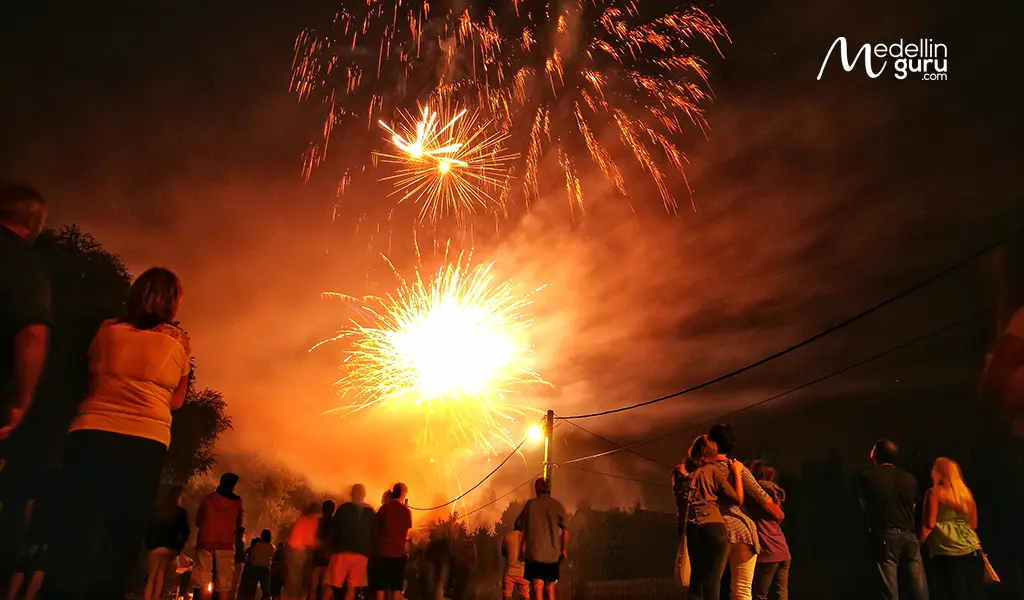
What Is la Alborada?
La Alborada is an early‑season fireworks event most closely associated with Medellín and its surrounding metro area, when residents set off fireworks just after midnight at the start of December 1. Unlike official Christmas events, La Alborada grew informally and is linked to a problematic history involving a now‑disbanded paramilitary group, which contributes to its negative reputation among many locals.
Today, La Alborada is controversial not only because of its origins, but also due to the high level of risk: much of the pólvora is homemade or poorly regulated, often lit from balconies, rooftops, and crowded residential streets. This has led to frequent injuries, fires, and distress for families and pets, prompting Medellín authorities to publicly discourage and attempt to curb the practice. Being aware of La Alborada’s timing and impact is essential for planning where to be, and where not to be, on that night.
Is Pólvora Legal Under Christmas Fireworks Safety in Colombia Rules?
The legality of pólvora in Colombia is shaped by a mix of national rules and strict local regulations issued by departments and municipalities. In practice, most personal, non‑professional use of medium and high‑power fireworks is restricted or completely banned in major cities, and those restrictions apply equally to foreigners and Colombians.
Many newcomers assume that because they see fireworks being set off everywhere, they must be legal or at least tolerated. In reality, national rules focus on who can sell, transport, and use authorized pyrotechnics professionally, while mayors and governors can prohibit consumer use entirely to protect public health and safety. This creates a patchwork of local regulations, so Christmas fireworks safety in Colombia depends heavily on where you are and which local decrees are in force.
Which Cities Have the Strictest Pólvora Bans?
Major cities and departments, where expat communities are concentrated, are often the most restrictive
-
Medellín/Antioquia
The metropolitan area consistently enforces a strict ban on the manufacture, sale, and personal use of most pyrotechnics. Local authorities launch extensive campaigns aimed at reducing the annual injury count, which often rises sharply during the Christmas fireworks safety in Colombia season.
-
Bogotá
The capital city typically enforces similar bans on personal use, restricting the lighting of fireworks to professional, government-sanctioned displays.
-
Cali/Valle del Cauca
Cali has repeatedly implemented strong restrictions on consumer fireworks, focusing on preventing injuries to children and reducing hospital admissions during the holiday period. Public messaging campaigns and local decrees often emphasize zero tolerance for illegal pólvora in neighborhoods.
-
Barranquilla/Atlántico
Barranquilla also tends to regulate personal fireworks heavily, encouraging residents to attend official events instead of using pólvora at home. Authorities frequently combine inspections, confiscations, and awareness campaigns in December to limit illegal sales and use.
What are the Penalties for Illegal Use?
Colombian fireworks rules apply to everyone. Expats and tourists must follow the same sanctions as locals. Authorities issue heavy fines for buying, storing, or lighting prohibited pólvora. These costs often reach millions of pesos. In many cases, the law calculates fines based on the legal daily minimum wage. One single violation can become very expensive.
The risks increase if minors are involved. Authorities can impose community service on responsible adults. This policy shows a zero-tolerance stance toward exposing children to risk. Beyond financial costs, pólvora can cause property damage or injury. These accidents may lead to civil liability or criminal investigations. Avoiding fireworks is the best way to protect your legal status.

How Can Expats Improve Christmas Fireworks Safety?
Adopt the mindset that any informal, neighborhood fireworks are potentially unsafe, even if locals treat them as normal. Keep a wide distance from people lighting pólvora on sidewalks, in parks, or from balconies, and avoid crowds where fireworks are being launched at ground level.
Make “look, don’t touch” your golden rule for Christmas fireworks safety in Colombia: do not buy, hold, or light any type of firework, even small items that seem harmless. Choose to observe only from locations where you are protected from stray rockets or debris, such as inside a building or from a balcony that is clearly away from launch points.
Even if you follow every safety rule, accidents and unexpected health issues can still happen during the holidays. Having a reliable travel health policy in place before peak pólvora nights gives you peace of mind that emergency care, hospital stays, or follow‑up treatment will not become a financial crisis.
If you are unsure which policy fits your situation as an expat or long‑term visitor, Expat Group can help you compare options tailored to living in Colombia. Reaching out before the December rush means you can enjoy Christmas fireworks safety in Colombia knowing you have a solid backup plan in case something goes wrong.
How Can You Prepare for the Loud Holiday Fireworks in Colombia?
Noise from pólvora can be intense, especially on dates like La Alborada, Día de las Velitas, Christmas Eve, and New Year’s Eve. Try to stay in safer, quieter neighborhoods or higher‑floor apartments on those nights, and avoid unnecessary late‑night walking in areas where fireworks are common.
If you live with pets or have sensory sensitivities, prepare by closing windows, using white noise or music, and having a calm plan for the loudest hours. Planning around these peak dates is a practical way to support your own Christmas fireworks safety while still enjoying the atmosphere.
How Should Expats Engage With Local Celebrations?
Enjoying the holidays does not require handling pólvora yourself. Prioritize official, organized events if they are available, such as city‑sponsored light shows or professional fireworks displays, which are generally better controlled than neighborhood launches.
When invited to gatherings where people use fireworks informally, set clear boundaries and politely decline any offers to participate in lighting them. Sharing that you prefer to watch from a distance for safety reasons is widely accepted and helps keep your Christmas fireworks safety front and center without disrespecting local traditions.
What Simple Safety Rules Apply in Public Areas?
Enjoying the holidays does not require handling pólvora yourself. Prioritize official, organized events if they are available, such as city‑sponsored light shows or professional fireworks displays, which are generally better controlled than neighborhood launches.
When invited to gatherings where people use fireworks informally, set clear boundaries and politely decline any offers to participate in lighting them. Sharing that you prefer to watch from a distance for safety reasons is widely accepted and helps keep your Christmas fireworks safety front and center without disrespecting local traditions.

How Should You Care for Pets?
The sudden, repeated noise from pólvora can be extremely stressful for animals, even if they usually tolerate city sounds. Keep pets indoors in a secure, comfortable room and consider using background noise such as calming music or TV to soften the impact of the explosions outside.
What Should I Do if I Witness an Accident?
If you or someone nearby is injured in a pólvora incident, focus first on getting professional medical assistance rather than trying to manage serious wounds on your own. Call Colombia’s national emergency line 123, which connects you to coordinated emergency services and can dispatch medical support to your location.
Avoid home remedies for burns or blast injuries: do not apply creams, oils, toothpaste, or ice directly to serious burns, and do not attempt to remove clothing stuck to the skin. Instead, if it is safe to do so, move the person away from any remaining fireworks, keep them calm, and protect the injured area from further contamination while you wait for help. During the Christmas season, hospitals and clinics across Colombia, including in major cities like Medellín and Bogotá, are on high alert for burn and trauma cases related to pólvora, so early professional care is essential for the best outcome and an important part of responsible Christmas fireworks safety in Colombia.
Where Can Foreigners Safely Enjoy Christmas Fireworks in Colombia?
The safest and most legal way to watch fireworks is to attend large shows organized or authorized by municipal or departmental authorities. These events use certified pyrotechnics handled by trained professionals in secured areas, with crowd control and emergency services on standby.
By prioritizing these official events over street‑level pólvora, you avoid the risks linked to homemade fireworks, unsafe launch points, and unclear local regulations. This approach allows you to fully enjoy the holidays while respecting Colombian fireworks rules and protecting your own Christmas fireworks safety in Colombia.

Why Should I Avoid Unlicensed Street Vendors?
Unlicensed street vendors are typically selling illegal, homemade pólvora that does not comply with any safety standards. Purchasing from these sources directly contributes to the safety problem, subjects you to potential fines, and places you and those around you at risk of severe injury.
Medellin Guru's comprehensive Colombian culture series
In Medellin Guru, we love Colombia, and we usually write many blogs about Colombian culture, places to visit, and other tips for all expats to have a reliable guide and valuable and relevant information about Colombia. Read our blogs about Colombian Culture here:
- Top Tourist Attractions in Colombia: Top Things to Do
- Top Things to Do in Medellín and Nearby: Top Tourist Attractions
- How to be an Expat in Colombia: 12 Tips to be a Successful Expat
- Top Things to Do in Cali and Nearby: Top Tourist Attractions
- Celebrating July 20th: Colombia Independence Day
- Norte de Santander: 5 Escapes for a Weekend Adventure
- Unlock Ipiales in 24 Hours: Your Essential Adventure Blueprint!
- Pasto: Discover the wonders of the Surprise City
- Top Popular Colombian Drinks to Try When You Visit Colombia
- Villa de Leyva: A Colonial Gem in the Colombian Andes
- Traditional Colombian Food Dishes You Must Try in Colombia
- Medellin Guru Launch 2023: Gentrification, Tourism and Investment
- Popular Colombian Desserts You Must Try While in Colombia
- Exotic Tropical Fruits of Colombia a Fruit Lovers Paradise
- Popular Colombian Soups to Try When You Visit Colombia
- Día de las Velitas: Day of Candles Tradition in Colombia on December 7
- Things in Colombia That May Be Strange for Foreigners
- Things Colombians Do That Foreigners May Find Weird
- Popayán: A Well-Preserved Colonial Gem in Colombia Worth Visiting
- Tejo: A Colombian Game That Rewards You for Explosions
Other things to see and do in Colombia
- Caño Cristales – the most beautiful river in Colombia, which has also been called the most beautiful river in the world by some people.
- Carnival in Barranquilla – the second largest carnival in the world.
- Cartagena – Oozing history, romance and sun-drenched beaches, the allure of historical Cartagena is hard to resist.
- Ciudad Perdida – the site of an ancient city in Colombia that is older than Machu Picchu in Peru.
- Colombia’s Pacific coast – often overlooked by tourists visiting Colombia but offering untamed nature and undiscovered beauty that is off the beaten path for most foreign tourists.
- Desierto de la Tatacoa – the second largest arid zone in Colombia is Tatacoa Desert, which has surreal desert landscapes and some of the best stargazing in Colombia.
- Guatapé – a picturesque pueblo near Medellín known for its huge rock and lake. And it’s likely the most visited pueblo in Colombia by foreigners.
- La Guajira Peninsula – one of the most visually stunning places in South America, which is located on the northern tip of Colombia where the desert meets the sea.
- Las Lajas Sanctuary – the most beautiful church in Colombia, which has also been called the most beautiful church in the world.
- Medellín’s Christmas lights – Medellín’s annual world-class Christmas lights known as Alumbrados Navideños.
- Feria de Las Flores Medellin – Medellín’s world-famous flower festival each year.
- Parque Nacional Natural Los Nevados – a popular national park in Colombia located in the heart of the Colombian coffee region.
- Parque Tayrona – known for its beautiful beaches and the world’s highest coastal mountain range.
- Popayán – a colonial gem in Colombia best known for its white buildings and churches, it’s a city off the beaten path for foreign tourists but is definitely worth visiting.
- Rio Claro Nature Reserve – located about three hours from Medellín, Rio Claro is the perfect place to unplug from hectic daily life and enjoy a picturesque crystal-clear river, canyon and tropical rainforest.
- Salento and the Cocora Valley – Salento is a picturesque pueblo in Colombia’s coffee region and the nearby Cocora Valley is one of the most striking landscapes found in Colombia.
- San Agustín Archaeological Park – the largest group of pre-Columbian monuments and megalithic statues in South America and is a UNESCO World Heritage Site.
- San Andrés – Colombia’s Caribbean island which is a UNESCO World Biosphere Reserve featuring many beaches, islets and coral reefs that are filled with flora and fauna.
- San Gil – Colombia’s adventure capital that is full of things to do including white water rafting, paragliding, caving, rappelling, hiking and much more.
- San Jose del Guaviare – a hidden gem and eco-tourism location off the beaten path and offering wildlife watching, jungle trekking and delving into Colombia’s prehistoric past.
The Bottom Line: Christmas Fireworks Safety in Colombia: What Expats Must Know
Living in Colombia means adapting not only to its traditions but also to its rules, and Christmas fireworks safety in Colombia is a clear example of how cultural habits and legal requirements intersect for expats. The same shifting local decrees and regulations that make pólvora confusing are also present in areas like visas, residency, and real estate, which can be even more complex to navigate as a foreigner.
Medellin Guru Social media
Be part of our community. Find out about news, participate in events and enjoy the best of the city.